By Ragan Mills, founder of Bodynam
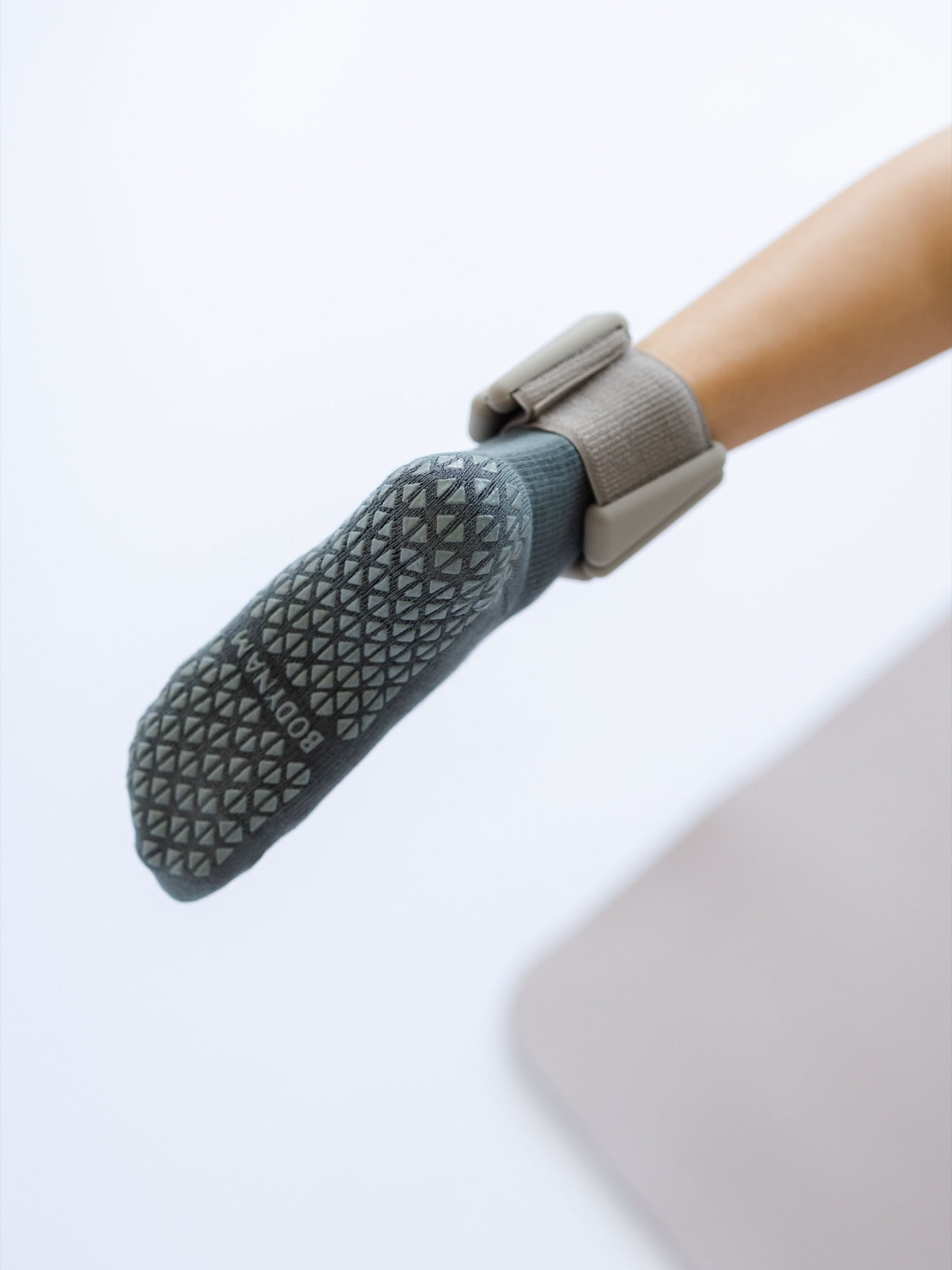
The grip socks with the best grip on a reformer are the ones with silicone that reaches the tips of your toes and the back of your heel, on a sock snug enough that your foot can't shift inside it. Brand names matter less than coverage, because a sock can only grip where its silicone actually meets the footbar, the carriage or the platform.
That sounds simple, but it's the detail most of us skip when we buy. Here's where reformer grip tends to fail, what to check before you buy, and how to test a pair in your first class.
Where reformer grip actually fails
Most slips on the reformer start at the edges of the foot, not the middle. Walk through a class and notice where your weight goes.
- Toes on the bar. In footwork on your toes, the tips and the ball carry the load. If the silicone stops before the toes, you're pressing fabric into metal.
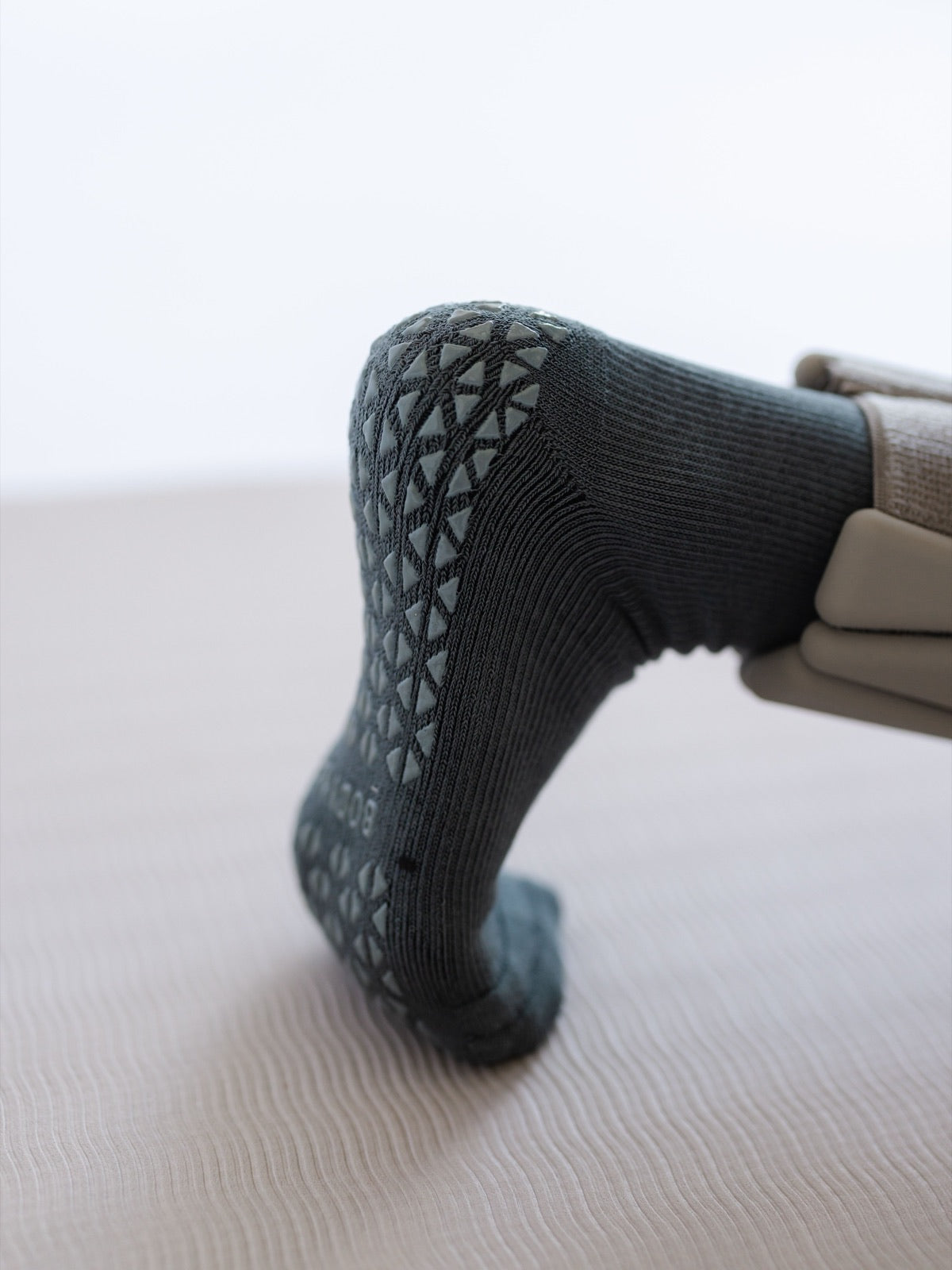
- Heels on the bar. Here the curve at the back of the heel is what touches the bar. A flat patch under the heel doesn't reach it.
- Standing and side work. Scooters, lunges and side splits load the outer edge of the foot. Gaps between grip zones are where a foot starts to drift.
- Inside the sock. If the sock twists or bunches, good silicone on the outside can't help. The sole stays put while your foot moves inside it.
Most grip socks stop short of the toes and the heel. They cover the middle of the foot well, and for mat work that's often plenty. On a moving carriage, the edges are where you feel the difference.
What to check before you buy
Silicone at the toes and up the heel
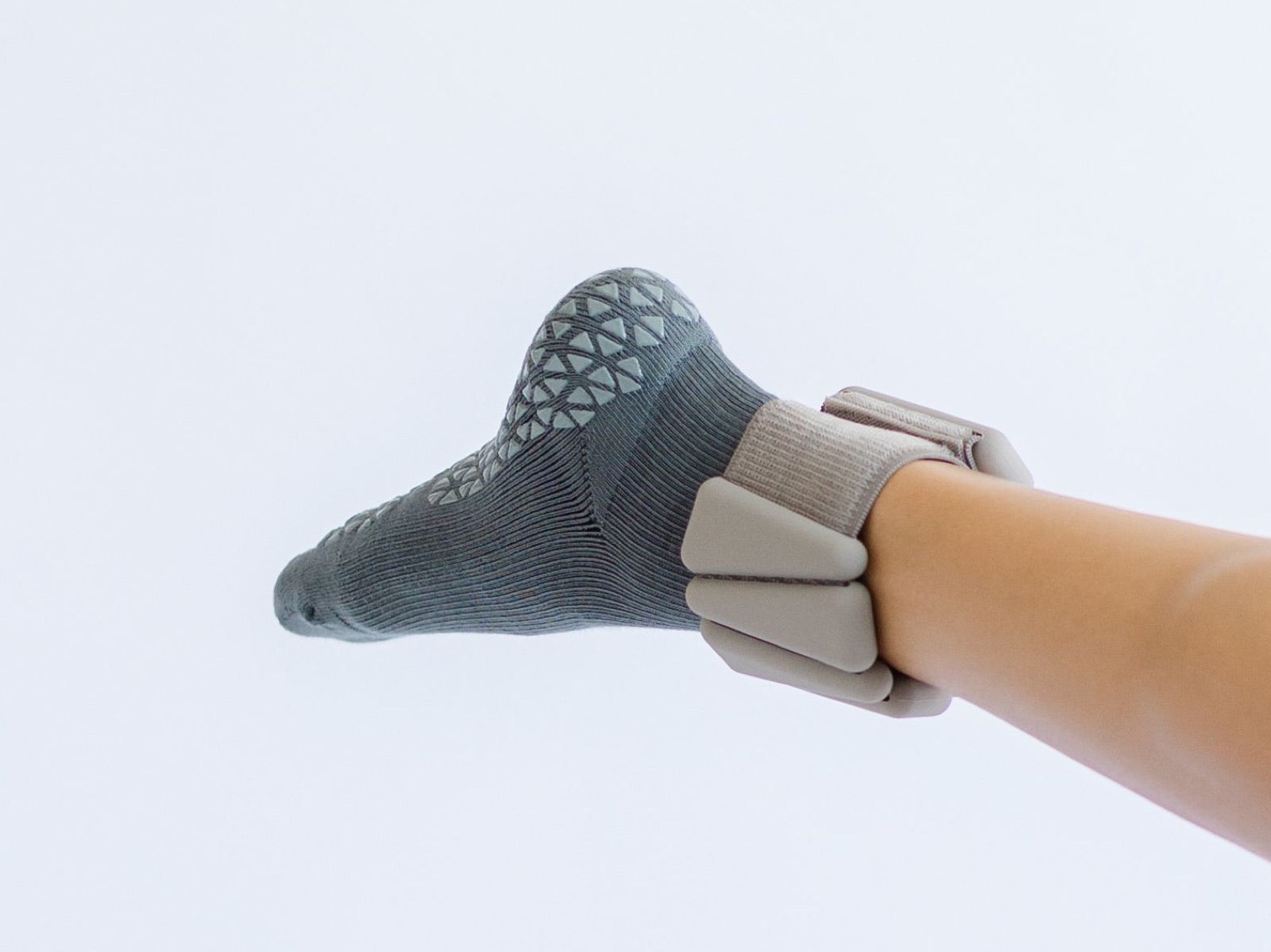
Turn the sock over before you look at anything else. You want silicone that runs to the toe tips and climbs the curve of the heel, not a patch that ends where the heel starts to round.
Coverage edge to edge
Grip across the full width of the sole matters for standing work, where the outer edge of the foot is doing the job. Look for a pattern without wide bare channels between zones.
A fit that moves with your foot
Snug, not tight. The sock should stay where you put it when you flex and point. If you're between sizes, check the brand's sizing guide rather than guessing, since a loose sock twists and a tight one pulls the silicone out of place.
Silicone that holds up
Grip that wears smooth after a few months isn't grip anymore. Care matters as much as construction, and there's more on that below.
How Bodynam approaches reformer grip
This is the problem Bodynam was built around. Form has always been everything to me. When my socks kept slipping on the reformer, I built the one I couldn't find.
The elevated heel comes first: silicone that carries up the back of the heel, so heels-on-the-bar work has something to hold. The silicone then runs heel to toe and edge to edge, so the toe tips and the outer edges of the sole are covered too. The aim is grip that lasts through the parts of class where a sock is asked to do the most.
The Ankle is $24 and sits low and clean. The Crew is $26 and sits higher on the leg, if you like more coverage. Both are made for reformer Pilates, Lagree, barre and yoga.
How to test grip in your first class
A new pair should prove itself in the first session. Try these gently during warm-up:
- Heels on the bar. Press out and hold. Your heel shouldn't creep down the bar.
- Toes on the bar. Rise and lower slowly. The ball and toes should stay exactly where you placed them.
- Standing on the platform. Shift your weight toward the outer edge of the foot. You shouldn't feel the sole start to slide.
- After class. Check the sock. If it has twisted around your foot, the fit is wrong, whatever the sole looks like.
Care that keeps the grip
Heat is hard on silicone. Wash grip socks cold and inside out, and let them air dry rather than putting them in the dryer. The care instructions page has the full routine.
FAQ
Are toe socks grippier on a reformer? Five-toe socks let your toes spread, which some people like on the footbar. Grip still comes down to where the silicone is, and many studios ask for a closed toe, so check before you buy.
Should reformer grip socks feel tight? Snug, not tight. The sock should move with your foot without pinching or rolling at the cuff.
Do I need different socks for mat and reformer? Not usually. A sock that grips well on a moving carriage will grip on a mat. The reverse isn't always true.
What if Bodynam doesn't grip for me? Grip it or send it back. 30 days. The refund covers the socks. You cover return postage.
Keep reading
- The best grip socks for barre class: what actually matters
- What grip socks do Pilates instructors recommend?
- The best grip socks for reformer Pilates: what to look for
About the author
Ragan Mills is the founder of Bodynam.
Share:
Are luxury Pilates socks worth the money?
The best grip socks for barre class: what actually matters