
By Ragan Mills, founder of Bodynam
The best grip socks for barre class have silicone under the ball of the foot and right out to the toes, where your weight sits in relevé, on a sock snug enough that it won't bunch when you plié. Closed toe or half toe is a personal call, but check your studio's rule first, since many barre studios ask for grip socks and some specify the style.
Barre asks something slightly different of a sock than reformer Pilates does. Here's what matters and why.
What barre asks of your feet
A barre class moves through a few positions again and again:
- Relevé. High on the balls of the feet, often pulsing. The forefoot and toes carry everything.
- Plié and turnout. Wide, rotated positions where the foot can want to slide outward on a polished floor.
- Planks and floor work. Toes tucked under, pressing into the floor or a mat.
- Stretches at the barre. One leg lifted with the heel resting on the barre, the standing foot holding steady.
Each of these loads a different part of the sole. A good barre sock covers all of them.
What to look for in a barre grip sock
Grip at the ball and the toes
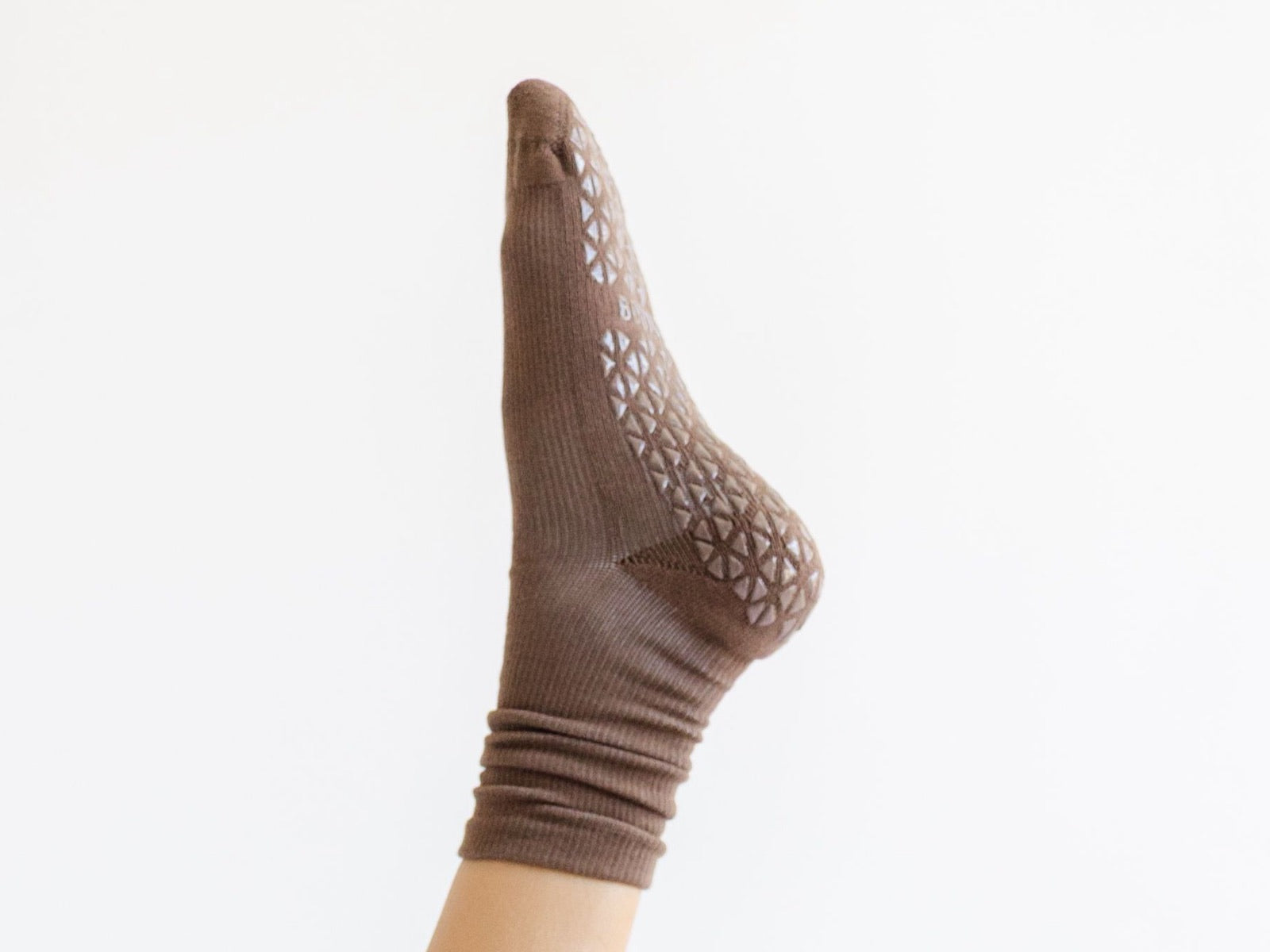
This is the big one. In relevé, if the silicone ends behind the toes, you're balancing on fabric. Turn the sock over and check that the grip reaches the toe tips.
Grip that doesn't stop at the heel
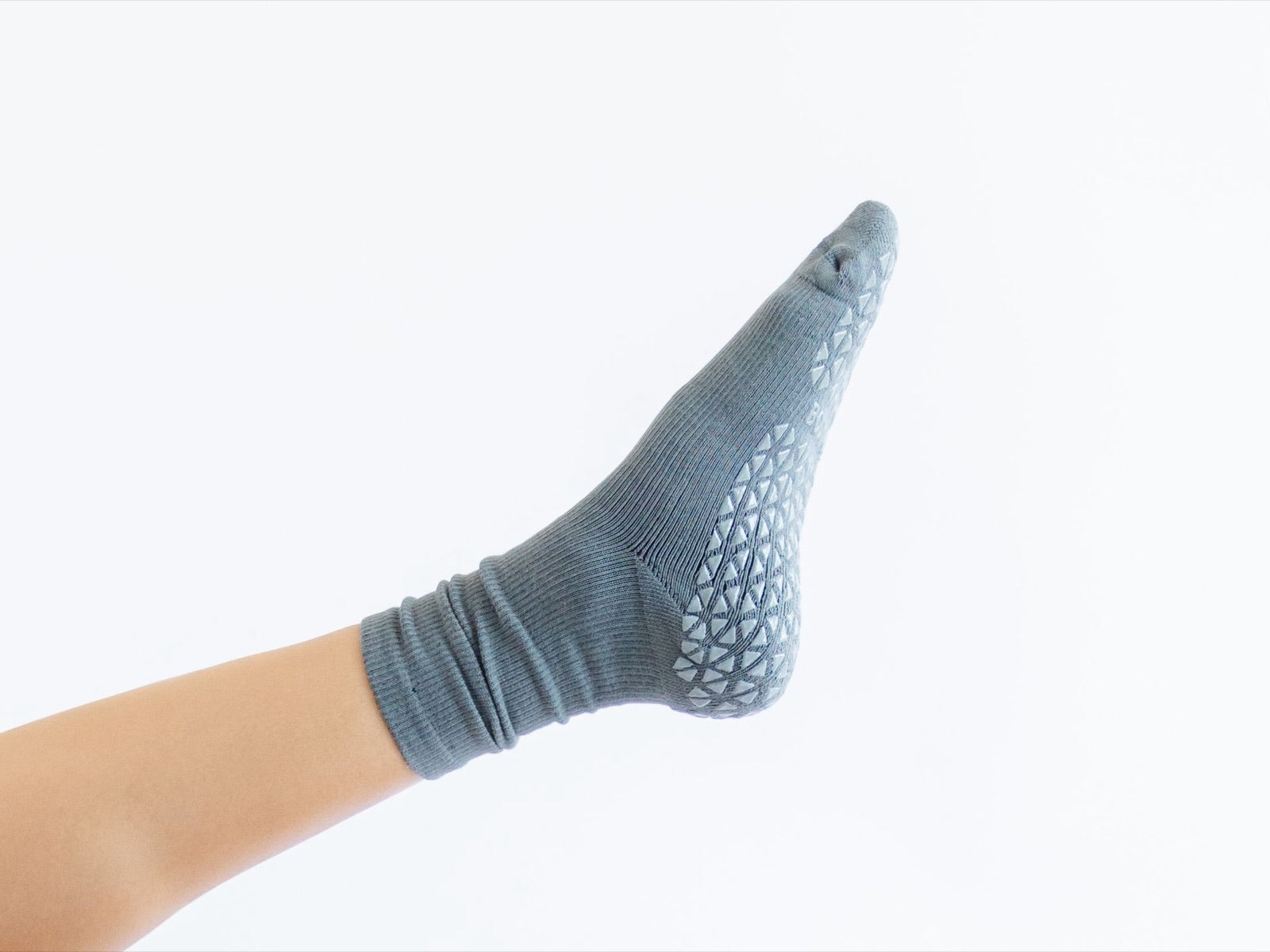
The heel matters in barre too. When your heel rests on the barre for a stretch, or you roll down through the foot from relevé, the back of the heel meets a surface. Most grip socks stop short of the toes and the heel, so look for silicone that reaches the edges.
A fit that won't bunch
Pulses and quick changes of position are hard on a loose sock. You want it snug enough to stay put, without a cuff that digs in.
Height that suits your studio
Ankle socks keep things clean and low. Crew socks sit higher and feel warmer, which some people like in a cooler room or for floor work. Neither grips better because of its height. It's about comfort and look.
Closed toe or half toe?
Half-toe and toeless socks let your toes touch the floor directly, which some people like for balance. Closed-toe socks are warmer and are what many studios require. If your studio has no rule, try both and keep the one you stop thinking about.
A few studio tips
- Check the rule before your first class. Many studios require grip socks, and some sell their own at the front desk.
- Bring a spare pair. Back-to-back classes are easier with a fresh pair.
- Wash cold, air dry. Heat is hard on silicone. Turn socks inside out, wash cold and skip the dryer to keep the grip working. Our care instructions have the details.
Where Bodynam fits for barre
Bodynam socks are made for barre as well as reformer Pilates, Lagree and yoga. The elevated heel carries silicone up the back of the heel, and the silicone runs heel to toe and edge to edge, so the ball, the toes and the heel are all covered. It's grip that lasts through the parts of class that ask the most of a sock.
The Ankle, $24, is the low, clean option for most classes. The Crew, $26, sits higher on the leg if you like more coverage. If you're unsure of your size, the sizing guide has the measurements.
FAQ
Can I use Pilates grip socks for barre? Yes. A sock with silicone at the toes, ball and heel works for both. What changes is where you feel it: barre leans on the forefoot, while the reformer uses the whole sole.
Do barre socks need straps? No. Straps are a style choice. A sock that fits snugly stays put without them.
Are ankle or crew socks better for barre? Neither grips better. Ankle is lower and cleaner. Crew is warmer and covers more of the leg.
What if they don't grip for me? Grip it or send it back. 30 days. The refund covers the socks. You cover return postage.
Keep reading
- Which grip socks have the best grip on a reformer?
- Dot grip vs heel-to-toe grip socks for Pilates
- Are luxury Pilates socks worth the money?
About the author
Ragan Mills is the founder of Bodynam.
Share:
Which grip socks have the best grip on a reformer?
What grip socks do Pilates instructors recommend?