By Ragan Mills, founder of Bodynam
For reformer Pilates, full-sole grip socks are the better choice for most people, because your foot meets the footbar and carriage at the heel, the arch, the ball and the toes. Dot grips can work well for mat classes, barre and home practice, where the surface under you doesn't move.
The longer answer depends on what you mean by each term, because the labels get used loosely.
What full-sole and dot grip actually mean
Dot grip usually means small, separate silicone or rubber dots spaced across part of the sole. Coverage varies widely. Some pairs have dots from heel to toe, while others cluster them through the middle of the foot.
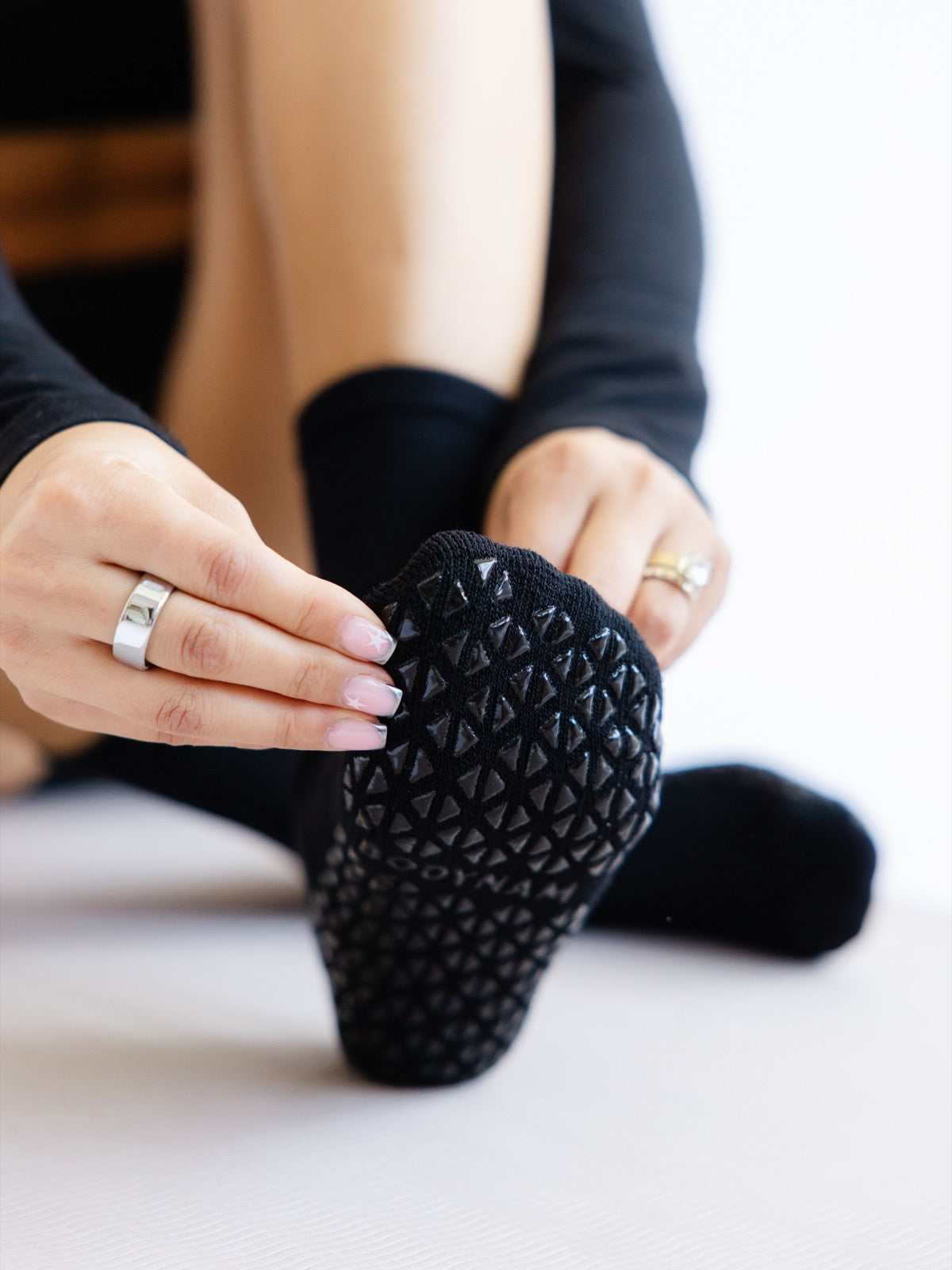
Full-sole grip means silicone covers the sole continuously or in a dense pattern, without large bare patches. The pattern might be triangles, lines, a honeycomb or a lattice. The shape matters less than the coverage.
So the real question isn't dots versus no dots. It's how much of your foot is covered, and whether the grip reaches the places that touch the equipment.
Why coverage matters on a reformer
Watch where your feet land in a single class:
- Footwork on the heels. The back of the heel presses into the bar. Without grip there, the heel can roll off.
- Relevé and tendon stretch. The toes and the ball of the foot take the load on a narrow bar.
- Elephant, scooter and standing lunges. The whole sole works on a moving carriage, often at an angle.
- Side splits. The edges of the foot press out against the platform and carriage.
Most grip socks stop short of the toes and the heel. On a mat, you'd rarely notice. On a reformer, those gaps line up with the moments your foot is most likely to slide.
There's a comfort point too. Pressing your full weight into a metal footbar through a few raised dots can create pressure points. A denser, flatter pattern spreads the load more evenly.
When dot grips are perfectly fine
Dot grips aren't wrong. They're often the right call for:
- Mat Pilates, where the floor stays still and you need less friction.
- Barre, where some people like a little glide for turns and pivots.
- Yoga and home practice, or wearing around the house.
- Trying a new class, when you're not ready to invest in a premium pair.
Some people also prefer the lighter, more flexible feel of open fabric between dots. If that's you, and you're mostly on a mat, there's no reason to switch.
What matters as much as the pattern
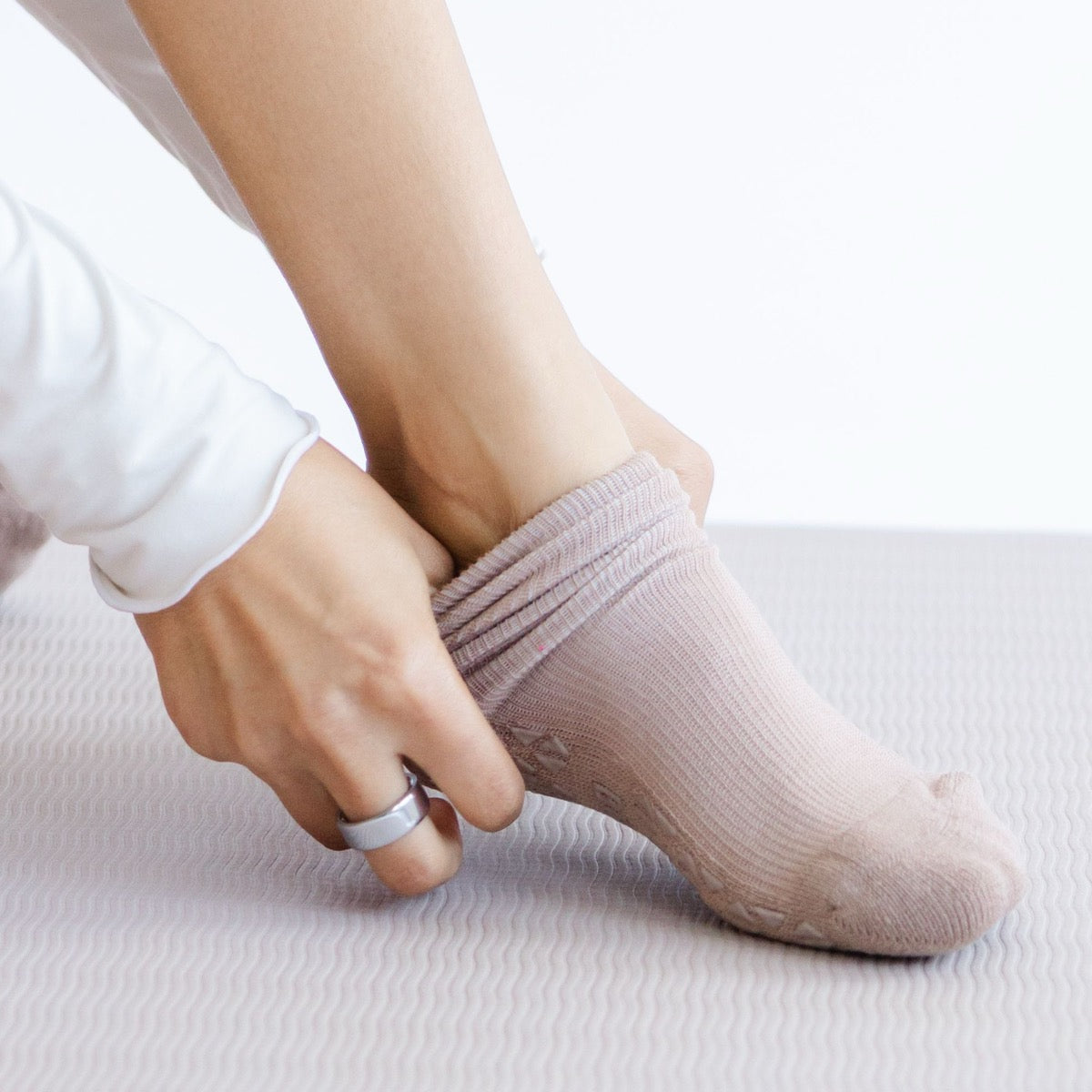
Fit. A loose sock moves on your foot, and the grip moves with it. Even full-sole coverage won't help if the sock is twisting. Size by shoe size and go snug.
The heel. Grip under the heel and a heel that stays seated are two different things. You need both for footwork.
Fabric. Sweat inside the sock undoes good grip outside it. A breathable knit helps in warm studios.
Care. Some grip finishes hold up better than others, but how you wash them matters most. Wash cold, turn them inside out and air dry.
A quick test before your next class
You don't need a reformer to judge a pair.
- Turn the sock over. Look at where the grip starts and stops. Does it reach the heel? The toes?
- Stand on a smooth floor and rise onto the balls of your feet. You should feel steady, not like you're skating.
- Rock back onto your heels. If the heel feels slick here, it'll feel slicker on a footbar.
- Do a slow lunge and pivot. Notice whether the sock twists on your foot.
A pair that passes all four will likely serve you well on the carriage.
Where Bodynam fits
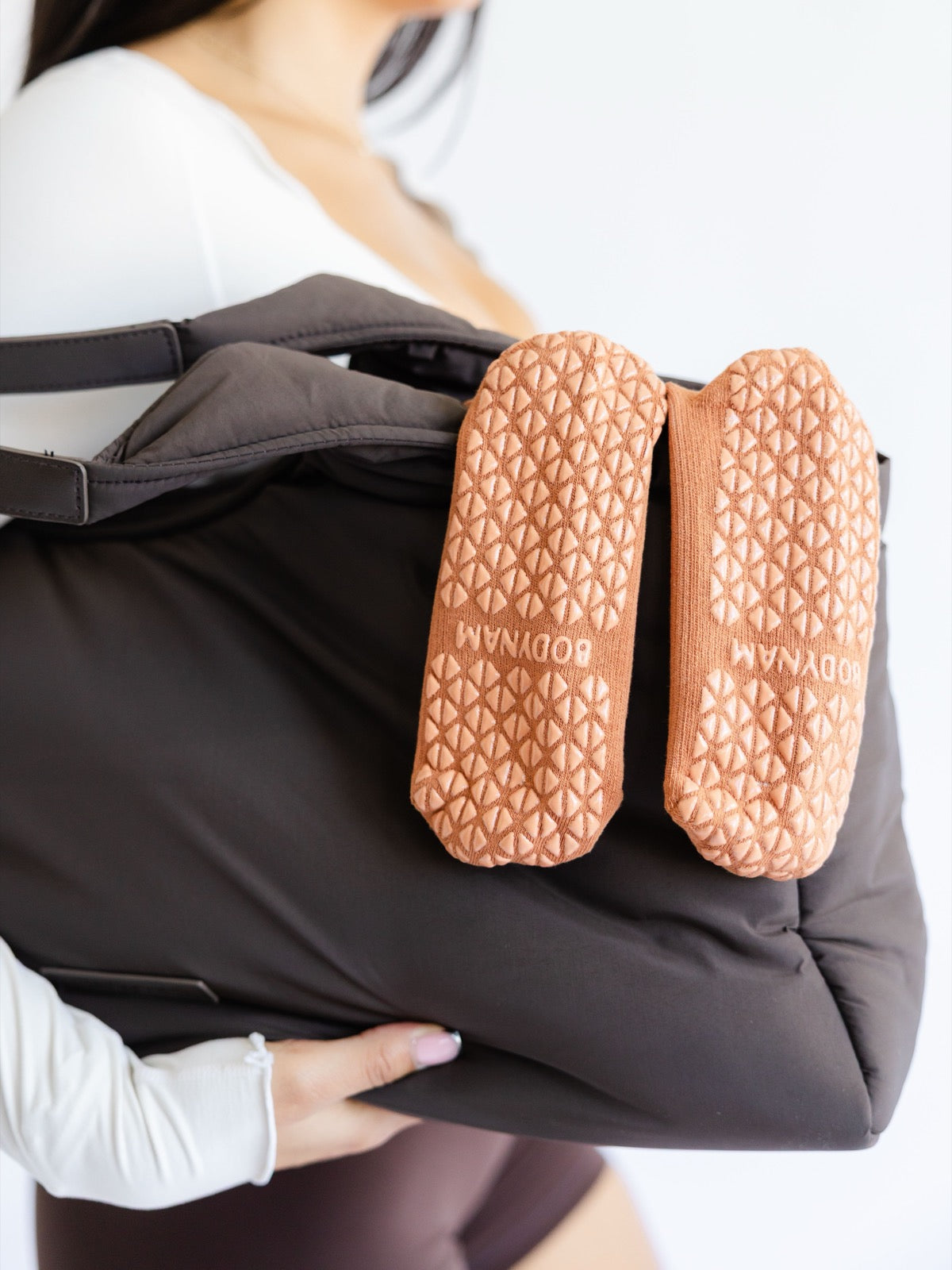
Bodynam sits on the full-sole side of this question. Both styles have an elevated heel and full heel-to-toe silicone, so you stay planted from the first roll-down to the last.
Both are on bodynam.com and Amazon, with complimentary shipping over $40. Grip it or send it back. 30 days. You cover return postage.
If you mostly practice on a mat and love the feel of a dot-grip sock, keep it. Full-sole coverage earns its place when the surface under you starts to move.
FAQ
Are full-sole grip socks better for mat Pilates? Not necessarily. On a mat, dot grips often give plenty of hold. Full-sole coverage matters most on a reformer, where the surface moves.
Do full-sole grip socks feel stiff? It depends on the pattern and the knit. A well-made pair should flex with your foot. Try a slow roll through the foot when you first put them on.
Are dot grip socks okay for the reformer? Many people use them without trouble. If your heel or toes slide on the footbar, more coverage is the first thing to try.
Does the shape of the grip matter? Less than coverage and fit do. Choose a pattern that reaches the parts of your foot that touch the equipment.
What's the difference between The Ankle and The Crew? Height. Both have an elevated heel and full heel-to-toe silicone. Compare The Ankle and The Crew.
Keep reading
- Which grip socks have the best grip on a reformer?
- The best grip socks for barre class: what actually matters
- The best grip socks for reformer Pilates: what to look for
About the author
Ragan Mills is the founder of Bodynam.
Share:
The best grip socks for reformer Pilates: what to look for
Are luxury Pilates socks worth the money?